
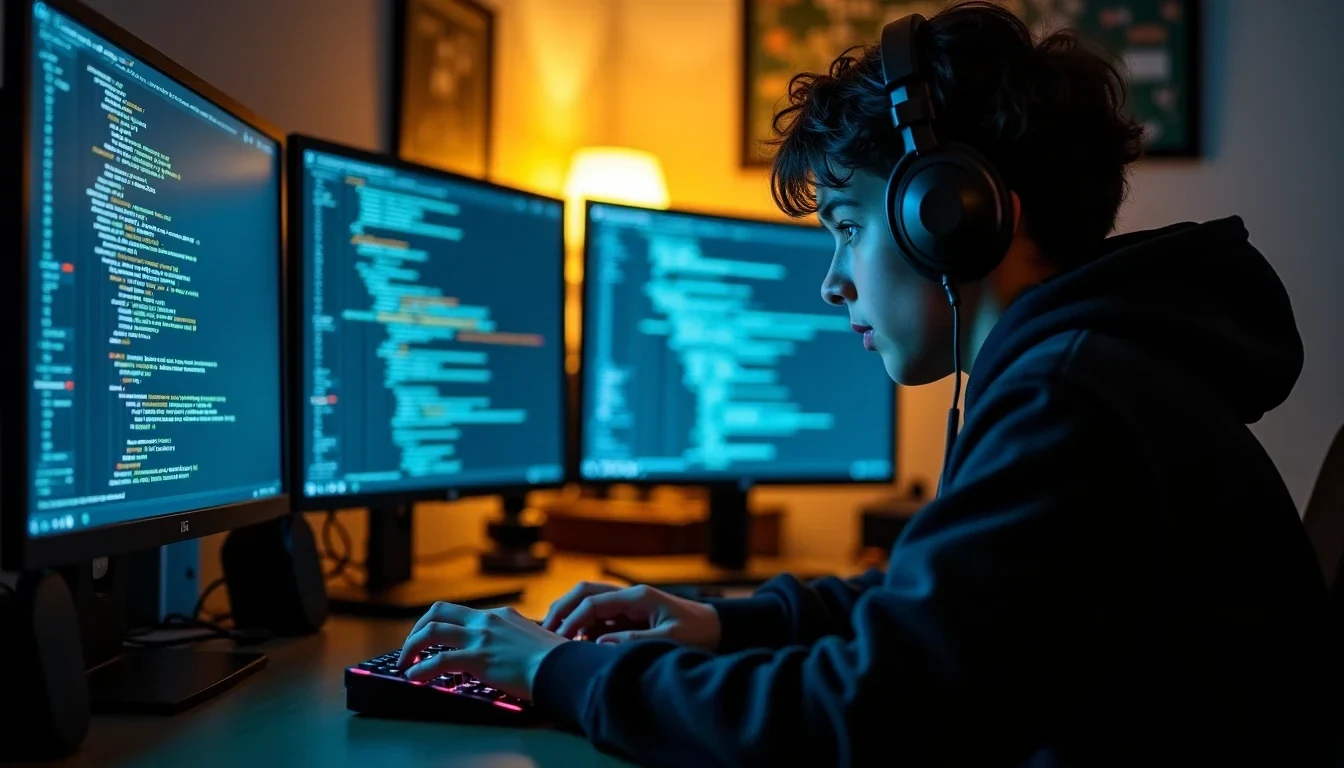
Abliterated AI models are not just clever; they are boringly practical. Strip out the refusal layer, give a model like Qwen 3.8-27B enough RAM or VRAM, and you have a local machine that will happily answer the kinds of prompts most commercial models are trained to swat away.
This changes the shape of cybercrime. A person who could not write a working exploit from scratch can now ask a model to help assemble one, rewrite it, hide it, test it against raw source code, and draft the phishing email that delivers it. The skill ceiling stays high for defenders, but the skill floor drops for attackers.
What abliteration actually does
Open-weight models are usually trained with alignment steps such as supervised fine-tuning and reinforcement learning from human feedback. Those layers teach the model to refuse certain requests, especially prompts about malware, exploitation, hate content, or other clearly harmful material.
Abliteration attacks the refusal behavior itself. The method looks inside the model’s activation space, finds the internal directions associated with safety refusals, and neutralizes or alters them. Once those directions are stripped or modified, the model stops reacting like a compliant product and starts reacting like a raw text engine with its brakes removed.
An uncensored variant of Qwen 3.8-27B has already been released in this form, and it reportedly needs around 16 GB to 17 GB of RAM or VRAM to run locally. This is no longer exotic infrastructure. It is a serious workstation, not a state-level lab.
The practical consequence is blunt. A standard aligned model refuses harmful instructions, but an abliterated one answers.
What attackers do with an uncensored model
Criminals will not magically train a model to become a super-hacker. Large language models do not roam live networks during training, probing defenses and adapting in real time. Retraining a model at Qwen scale would mean enormous compute, specialized hardware, and a budget that can reach into millions of dollars.
Attackers do not need that.
They can use prompt engineering on the already-unlocked model and pull useful output from it immediately. The model does not need to become a bespoke cyberweapon; it only needs to become a reliable assistant.
With the guardrails removed, a junior attacker can ask for custom malware code, ask for a known exploit to be rewritten so antivirus tools have a harder time spotting it, or feed in a vulnerability description and get back a proof of concept. Raw source code can be dropped into the prompt and analyzed for obvious mistakes, insecure logic, injection points, and other weak spots that a tired reviewer may miss on the first pass.
Phishing output gets ugly fast. An uncensored model can produce convincing messages in multiple languages, tailored to role, company, and tone, without the usual safety blocks interrupting the flow. This turns a clumsy scam into something that looks like internal finance, HR, or supplier mail.
Deep technical skill is no longer a barrier. The ability to describe the target well enough to the model is.
Why the local machine changes the risk
Cloud-hosted abuse is one thing. Local abuse is another.
When a model like Qwen 3.8-27B can run on consumer hardware with 16 GB to 17 GB of memory, the attacker is no longer dependent on a hosted API that can rate-limit, log, or shut them out. They can run the model privately, iterate quickly, and keep the output close to the machine they are using for the rest of the workflow.
This private loop reduces friction and removes visibility. A local model can sit beside a browser, a code editor, a credential dump, or a folder full of stolen source files and produce output without leaving a neat trail in some vendor dashboard.
The conversation around abliteration is more serious than a culture-war debate about censorship in AI. It is about operational convenience for bad actors. A model that refuses is an inconvenience; a model that complies is infrastructure.
The security team angle is not optional
Security teams will use the same class of models for defensive work, and they should. The problem is that attackers can use them too, often with less friction and less scrutiny.
Red teams already use generative models to accelerate test planning, write phishing simulations, draft attacker narratives, and summarize code paths. Once the refusal machinery is removed, the same workflow can be turned around and aimed at live targets with very little adaptation. The model becomes a rapid assistant for both sides of the aisle, except one side is trying to keep the lights on and the other side is trying to get paid.
For web developers, the operational impact is immediate. Code review has to assume that an attacker may already have an AI-assisted pass over the repository. Vulnerability scanning needs to be more than a once-off pipeline step. Dependency review, secret detection, input validation, and environment hardening stop being nice-to-have controls and become the boring parts that keep expensive incidents from happening.
A short defensive checklist looks like this:
- Run continuous secret scanning on repositories and deployment artifacts.
- Treat all public-facing forms, upload fields, and webhook endpoints as hostile by default.
- Review authentication and session handling with fresh eyes, not just automated linting.
- Lock down CI and deployment tokens as if they are already a target.
- Rehearse phishing response with real-looking examples, including multilingual variants.
- Test whether your detection stack catches rewritten or lightly obfuscated malware samples.
None of that is glamorous. It is still the work.
South African businesses should expect messier attacks
For local businesses, the threat is not theoretical and it does not need to be huge to hurt. A small accounting firm, an online shop, a law practice, a school, or a mid-sized agency does not need to be targeted by some cinematic advanced actor. It only needs one convincing email, one weak password reset flow, or one unpatched application.
AI-generated phishing raises the quality floor for attackers. Messages can be localized, polished, and context-aware. They can imitate procurement, supplier payment, password resets, travel booking queries, or internal notice patterns. Once those messages can be generated at volume, the old human tell of awkward grammar stops being useful.
This also affects the broader web environment around the business. AI can flood search results and social feeds with synthetic copy, which means legitimate brands have to work harder to keep their own material visible and trusted. SEO sludge is already a problem, and uncensored models only make it cheaper to produce.
A business that still treats cybersecurity as a firewall purchase is already behind. The attack surface now includes content, reputation, search visibility, staff habits, and the speed at which the organization can spot a weird request before somebody clicks the wrong link.
The web is also being reshaped around machines
The cyber threat is only half of the story. The web itself is changing under the pressure of AI agents and synthetic content.
The old search and click model is being squeezed by answer engines. People ask a question, the model gives a summary at the top, and the click never happens. This is already eating into the traffic model that paid for independent blogs, specialist publishers, and a lot of niche content sites.
Then there is the bot problem. Cloudflare and similar providers have been showing for some time that automated traffic now accounts for a very large share of what moves across the web, and AI crawlers are part of that flood. Once text, images, and commentary can be generated for almost nothing, the web fills up with material designed to satisfy a ranking system rather than a human reader. The result is not a smarter internet; it is a noisier one.
People respond by retreating into smaller spaces where identity is harder to fake. Discord servers, private groups, invite-only communities, and verified networks become more attractive because they feel like places where a real person might still be sitting on the other side.
The next phase is browser agents. Instead of a person searching for flights, comparing options, filling out forms, and paying manually, an AI agent will do the whole sequence from a budget and destination prompt. That sounds convenient until you remember what it means for sites.
Websites will have to be built for code readers, not just human eyes. Product pages, forms, booking flows, checkout steps, and structured data will need to be easier for agents to parse, compare, and complete. Good design will still matter, but machine-readable design will matter more than most people want to admit.
The hard part is not the model, it is the response
Abliterated models are not a novelty for hobbyists anymore. They are a working example of what happens when safety layers are removed from capable open-weight systems and the result is left available to anyone with enough hardware and a decent prompt.
This does not mean every attack becomes automated overnight. It does mean the old assumption that serious abuse requires serious skill is getting weaker by the month.
The right response for businesses and developers is straightforward, if inconvenient. Assume phishing will get better. Assume exploit assistance will get cheaper. Assume source code will be probed by tools that never get tired. Then tighten the basic controls, test them properly, and stop relying on human intuition as the main line of defense.
The web is not waiting for permission to change. It is already being reorganized around machines that write, scrape, summarize, and act. The people who keep treating that as a future problem are going to learn the hard way.